

By Julian & Renee (Australia) – with writing support from Alberto Aldana (Colombia)
In New South Wales, buying property off-the-plan has its advantages, but it also carries hidden risks—particularly when it comes to the Occupation Certificate (OC). This document, while seemingly routine, is one of the most critical elements of an off-the-plan purchase and can significantly impact buyers. You may feel secure after signing a contract and paying a deposit, but the issuing of an OC can trigger a sequence of events that is difficult to stop.
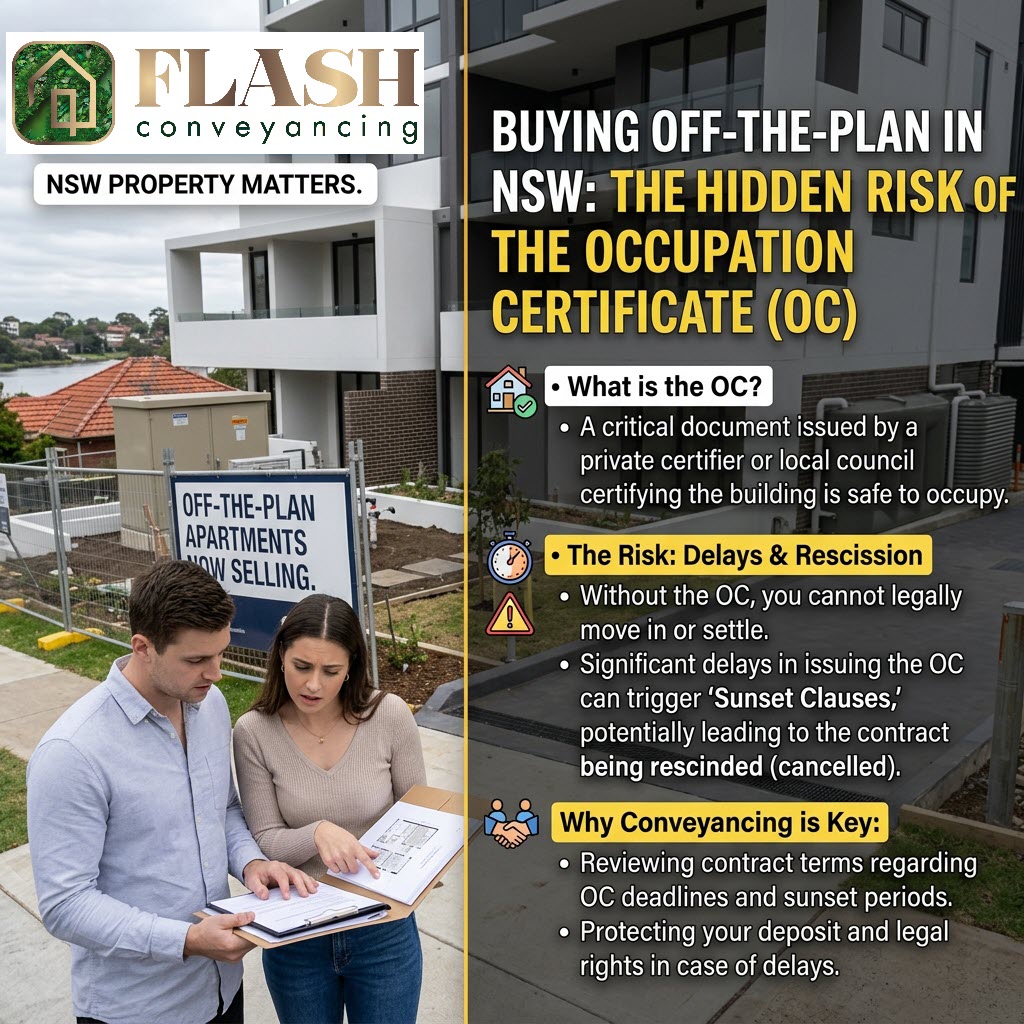
The OC is a legal document confirming that a private certifier or local council considers the building “fit for occupation.” For buyers, the issuing of the OC typically signals the start of the settlement process.
Once the developer serves the OC, buyers usually have a limited period (commonly 14 to 21 days) to pay the balance of the purchase price and complete settlement. Importantly, once the OC has been issued, buyers are generally required to proceed with settlement, even if there are minor defects such as cosmetic issues or minor plumbing problems.
Failure to complete settlement on time can result in serious consequences, including forfeiture of the 10% deposit and potential liability for damages. While the OC triggers settlement, the defects process is typically dealt with after completion. Buyers are usually given a limited timeframe—often around 90 days—to submit a defects list.
However, many off-the-plan contracts allow only one defects list to be submitted for minor defects. This means that any issues identified after that list is provided may not be covered. For this reason, it is essential to thoroughly inspect the property before and shortly after settlement to ensure all defects are identified and reported. Buyers are often advised to time their defects report carefully to capture as many issues as possible within the allowed period.
Although protections such as defect liability periods exist, disputes can still arise. If defects are identified and the developer fails to address them, this may lead to formal disputes. In some cases, matters may escalate to proceedings in the NSW Civil and Administrative Tribunal (NCAT), which can be both time-consuming and costly. This highlights the importance of working with experienced professionals, such as conveyancers, to ensure what are your rights.
At Flash Conveyancing, Julian and Renee emphasise the importance of thorough due diligence, including careful review of contract terms. With extensive experience working with local councils such as Blacktown, Hawkesbury, Blue Mountains, and Parramatta, their team provides tailored support throughout the settlement process. They assist clients in understanding key issues such as Occupation Certificates, and potential risks. Whether you are a first-home buyer or an investor, Flash Conveyancing aims to ensure your transaction proceeds smoothly and with a clear understanding of your legal position. Being informed and proactive about the Occupation Certificate and the off-the-plan process can help you avoid significant financial and legal risks in the long term.
Our team has a proven track record of working seamlessly with the Blacktown, Hawkesbury, Blue Mountains, The Hills Shire, Hornsby, and Parramatta councils.
North-West Growth Corridor: Marsden Park, Box Hill, Schofields, Tallawong, Riverstone, Gables, Melonba, Grantham Farm, and Angus.
The Hills District & Surrounds: Castle Hill, Kellyville, North Kellyville, Bella Vista, Baulkham Hills, Beaumont Hills, Norwest, Rouse Hill, Winston Hills, and Westmead.
Blacktown City & Established West: Blacktown, Seven Hills, Glendenning, Glenwood, Stanhope Gardens, The Ponds, Quakers Hill, Kings Langley, Parklea, Acacia Gardens, Arndell Park, Rooty Hill, and Doonside.
Hawkesbury & Lifestyle Estates: Dural, Middle Dural, Kenthurst, Glenhaven, Galston, Glenorie, Annangrove, Nelson, Cattai, Maraylya, Vineyard, and Windsor.
Parramatta & Emerging Hubs: Parramatta, Northmead, North Rocks, North Parramatta, Wentworthville, and St Marys.