

By Julian & Renee (Australia) – with writing support from Alberto Aldana (Colombia)
If you own property in New South Wales, land tax may apply to you depending on the value of your land and how it is used. Land tax is a state-based charge administered by Revenue NSW and is calculated on the unimproved value of your land — which means the value of the land itself, excluding buildings, pools, driveways, or other renovations.
From a legal and conveyancing perspective, land tax is relevant to both the vendor and the purchaser during a sale. Conveyancers prepare the sale contract for the vendor, and if you’re a purchaser, conveyancers review the contract and advise whether it includes land tax adjustments.
Land tax is assessed on the combined unimproved value of all non-exempt land you own, as of midnight on 31 December each year. Your principal place of residence is generally exempt. The current general threshold for land tax is $1,075,000. Once your combined taxable land value exceeds this threshold, land tax becomes payable.
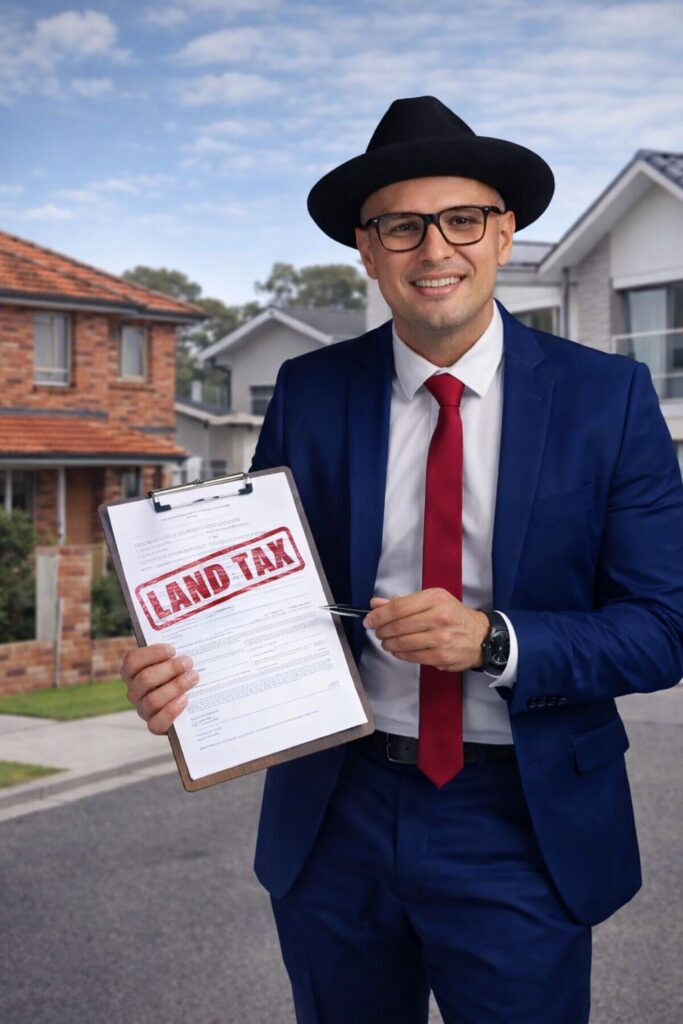
While land values have steadily risen across NSW, the land tax threshold has been effectively frozen since 2024. The 2024-2025 State Budget announced a freeze on both the general and premium rate thresholds for land tax years after 2024. As a result, more property owners (especially investors) are being caught by land tax because their land value has increased, but the threshold hasn’t kept pace with the market.
For sellers, it’s crucial to include land tax adjustment in the contract and provide a land tax clearance certificate, which your conveyancer can order and provide before settlement. As a purchaser, you should check whether land tax is adjustable or not, and consider having it removed if possible.
The risks of misunderstanding land tax are real:
- If your land value exceeds the threshold and you fail to lodge or update your details, you could face interest, penalties, and investigation by Revenue NSW.
- Converting your home into an investment property, inheriting land, purchasing vacant land, or moving overseas for an extended period can change your exemption status without you realizing it.
- Trusts are required to pay land tax regardless of the threshold, with the exception of SMSF (Self-Managed Super Fund) trusts.
Conveyancers play an important role in ensuring all required disclosures are made while complying with regulatory obligations. Flash Conveyancing, led by Julian & Renee, are specialists in property transactions across all of NSW. With extensive experience in navigating local councils such as Blacktown, Hawkesbury, Blue Mountains, The Hills, Hornsby, and Parramatta, we bring a personalised approach to every settlement. Whether you are buying, selling, or reviewing your investment structure, we proactively identify and address any land tax issues early in the transaction to ensure there are no unexpected costs or delays at settlement.
More information
https://www.revenue.nsw.gov.au/taxes-duties-levies-royalties/land-tax/understanding-land-tax/what-is-land-tax
https://www.revenue.nsw.gov.au/taxes-duties-levies-royalties/land-tax/understanding-land-tax/thresholds-and-rates
Our team has a proven track record of working seamlessly with the Blacktown, Hawkesbury, Blue Mountains, The Hills Shire, Hornsby, and Parramatta councils.
North-West Growth Corridor: Marsden Park, Box Hill, Schofields, Tallawong, Riverstone, Gables, Melonba, Grantham Farm, and Angus.
The Hills District & Surrounds: Castle Hill, Kellyville, North Kellyville, Bella Vista, Baulkham Hills, Beaumont Hills, Norwest, Rouse Hill, Winston Hills, and Westmead.
Blacktown City & Established West: Blacktown, Seven Hills, Glendenning, Glenwood, Stanhope Gardens, The Ponds, Quakers Hill, Kings Langley, Parklea, Acacia Gardens, Arndell Park, Rooty Hill, and Doonside.
Hawkesbury & Lifestyle Estates: Dural, Middle Dural, Kenthurst, Glenhaven, Galston, Glenorie, Annangrove, Nelson, Cattai, Maraylya, Vineyard, and Windsor.
Parramatta & Emerging Hubs: Parramatta, Northmead, North Rocks, North Parramatta, Wentworthville, and St Marys.